

ASSESSMENT OF ECONOMIC RISKS AT AN INDUSTRIAL ENTERPRISE BASED ON A STUDY OF RESOURCE PROVISION OF A BUSINESS PROCESS
Abstract
This study aims to assess and identify economic risks at an industrial enterprise taking into account the optimal allocation of resources to ensure the sustainability of business processes. The assessment was conducted using the example of Belgorod Dairy Plant JSC. The author’s methodology allows to determine a qualitative characteristic of resources for key business processes of enterprise and to allocate directions of their optimization. The main objective of this study is to quantify, identify and model risk situations in order to determine the financial impact and likelihood of each type of risk. The study demonstrates the instability of business processes at an industrial enterprise, which triggers a number of risk events. Identification of risks and assessment of their probability allowed to build maps of correlated risks for each of the selected business processes and to highlight priority risks that are key causes or “central nodes”, i.e. affecting other types of risks. It is important to emphasize that this approach results in risk management being based on resource management to support the business process, which facilitates more informed and strategic risk management decisions at an industrial enterprise.
Introduction
The current business environment is highly dynamic and characterized by considerable uncertainty, which complicates the process of making effective management decisions at enterprises. Implementing a strategic management mechanism in such conditions is particularly challenging, as long-term planning in an environment of uncertainty requires constant adjustments to the enterprise’s development strategy and even a possible transition to scenario planning, as it is virtually impossible to predict all possible scenarios in the external business environment.
Uncertainty and turbulence in the market field create a multitude of risky situations. Depending on the dynamic nature of the competitive environment, economic risks for enterprises are increasing at an accelerated rate. Trends are rapidly emerging for strategic risks, environmental and economic risks, and cybersecurity issues (cyber risks) at enterprises using artificial intelligence technologies. Financial, moral, and reputational losses for enterprises reflect the need to identify and forecast risks.
Key factors in effective risk management at an enterprise include high-quality data analysis, including marketing research to assess market conditions; identifying the negative and positive consequences of potential fluctuations in the external business environment; developing an action plan to eliminate or reduce risks; and clearly delineating powers and responsibilities in the organizational structure of enterprise management.
Modern economic literature presents a wide range of risk identification and assessment methods. Qualitative risk assessment methods rely on expert knowledge, experience, and analytical judgment. These methods include expert methods, peer review methods, cost appropriateness methods, PESTEL analysis, and matrix analysis. These methods are appropriate when data is lacking and a thorough, qualitative analysis of the causes of risk situations is required. Quantitative assessment methods are highly accurate and rely on the analysis and processing of numerical data and economic and mathematical modeling.
Special attention should be paid to risk assessment methods based on the calculation of an integral indicator. Such methods are optimal for Russian industrial enterprises, as they allow not only to assess the level of risk, but also to determine the type of risk situation. The essence of these methods is to establish mathematical patterns between economic indicators that characterize the implementation of business processes at the enterprise. Threshold values are determined for the integral indicator, allowing one to assess the level of risk. The information base in this case is the enterprise’s accounting and financial statements.
Various authors propose their own set of economic indicators and integrated indicator models for assessing the integrated indicator. For example, scientists A.V. Generalova, T.F. Morozova, and A.A. Kruglik use a number of indicators of the financial condition of an industrial enterprise as indicators included in their risk assessment. K.A. Shevtsov, O.V. Makovetskaya-Abramova, and S.K. Luneva also use an integrated approach in conjunction with expert assessments for risk assessment. The comprehensive approach to the assessment of risks of industrial enterprises is reflected in the works of D.M. Gadzhikurbanov and D.M. Glukhova, who propose a qualimetric model for assessing the risk profile of an industrial enterprise.
According to the authors, the approach to risk assessment should be hybrid, combining quantitative and qualitative analysis, which is optimal in modern conditions.
This article aims to assess the economic risks of an industrial enterprise quantitatively, using the author’s hybrid-based methodology.
Methods
The authors conducted this study using statistical analysis, economic and mathematical modelling, and graphical methods. The empirical basis for assessing economic risks comprised balance sheet data, financial reporting results and statistical indicators published on the company’s official website. Furthermore, this article draws on research papers and studies by Russian and foreign scientists.
Main part
The analysis of economic risks at an industrial enterprise is based on the study of the architecture of business processes, the sustainability of which is determined by the efficiency of resource allocation and resource conservation. Each business process is organized and implemented in a certain resource environment, and the deficiency of any resource supporting the business process can lead to certain failures, initially in the business process itself, then further and in the achievement of the strategic goals of the enterprise, which entails the emergence of economic risks.
Thus, the chain of interconnected elements “business process-resource-risk” is more correct for further analysis. Implementing a risk management process through the analysis and assessment of an enterprise’s complex business processes allows for a more rapid response to actual and potential risk changes or deviations. Creating risk registers for each individual business process as an analytical risk management tool also allows management to monitor the potential for risk situations.
We will conduct an economic risk assessment using the example of Belgorod Dairy Plant JSC based on a business process architecture study. The following business processes (BP) have been identified as the most vulnerable to risks:
‒ “Procurement and Supply Chain” BP,
‒ “Marketing” BP,
‒ “Production and Technological Process” BP,
‒ “Finance” BP,
‒ “Human Resources” BP,
‒ “Research and Development (R&D)” BP,
‒ “Investments” BP.
The mentioned business processes reflect the basic economic and managerial framework of the operation of the enterprise, affecting its production, commercial and investment activities. Furthermore, each business process is directly dependent on the resource provision of the enterprise. For example, the efficiency and sustainability of R&D depends on the availability of resources such as capital, digital technology, intellectual property, innovation, labor, and stakeholder trust.
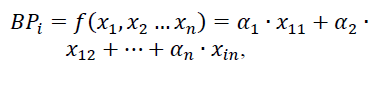
The identified resource dependence of business process allows to model it through linear production function:
 ,
,
where is the resource used to generate the process result,
is the metric that reflects the result/efficiency of the business process.
Indicators of resource capacity are shown in table 1.
Таблица 1
Индикаторы оценки ресурсного потенциала
Table 1
Indicators of resource capacity
Resource | Assessment Indicator |
Capital (equity) | return on equity (x11) equity turnover (x12) |
Labour (personnel) | return on labour (x21) employee turnover (x22) |
Innovation | R&D investments (x31) innovation ratio (x32) number of innovations developed (x32) |
Intellectual property | intangible assets (x41) share of intellectual property in non-current assets (x42) |
Digital Technology | electronic BPM system availability (x51) electronic document management system availability (x52) economic impact of digital technology implementation (x53) |
Reputation | level of competitiveness, market share (x61) asset turnover ratio (x62) return on assets (x63) |
Stakeholder trust | amount and direction of influence of a given stakeholder on the company's performance (x71) |
We will conduct an assessment of the sustainability of each business process at the Belgorod Dairy Plant JSC. To do this, we will calculate a coefficient of variation, which allows us to assess the degree of volatility, and present the results in Table 2. If , then business process is sustainable and stable. In case of , business process is unsustainable.
Таблица 2
Оценка устойчивости бизнес-процесса АО «Белгородский молочный комбинат»
Table 2
Assessment of business process sustainability of Belgorod Dairy Plant JSC
Indicators | Statistical quantities |
|
|
|
|
|
|
| ||
|
|
| 19,56 | 119,88 | 2,55 | 50,51 | 14,62 | 47,4 | 69,23 | |
| 7,54 | 5,56 | 73,69 | *** | *** | *** | *** |
| *** | *** |
| 2,80 | 0,24 | 8,67 | * | * | * | * |
| * | * |
| 1,14 | 0,52 | 46,04 | *** | *** | *** |
| *** | *** |
|
| 0,23 | 0,04 | 19,19 | * | * | * |
| * | * |
|
| 197454,00 | 84060,72 | 42,57 |
| *** | *** |
|
| *** | *** |
| 16,24 | 1,22 | 7,52 |
| * | * |
|
| * | * |
| 7,40 | 0,55 | 7,40 |
| * | * |
|
| * | * |
| 408,80 | 405,86 | 99,28 |
|
| *** |
|
| *** | *** |
| 0,05 | 0,03 | 50,72 |
|
| *** |
|
| *** | *** |
| 1 | 0,00 | 0,00 | * | * | * | * |
| * |
|
| 1 | 0,00 | 0,00 | * | * | * | * |
| * |
|
| 0 | 0,00 | 0,00∗ | * | * | * | * |
| * |
|
| 30,2 | 1,79 | 5,92 |
|
| * | * | * |
| * |
| 9,82 | 0,19 | 1,98 |
|
| * | * | * |
| * |
| 7,93 | 5,91 | 74,51 |
|
| *** | *** | *** |
| *** |
| 7,6 | 0,55 | 7,21 | * |
|
| * | * | * | * |
* ‒ stable indicator
*** ‒ unstable indicator
We interpret the table data as follows: if a business process metric is characterized by a high variance, it is a source of risk events. Furthermore, unstable dynamics of a specific resource within the business process under study indicates problem areas of resource potential that ensure the
implementation of the business process.
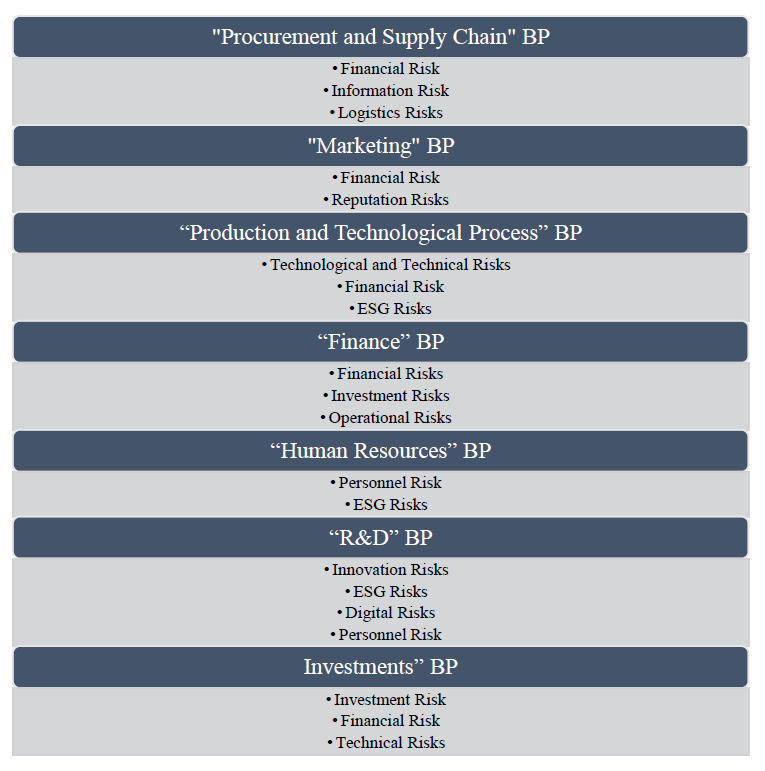
According to the results of Table 2, a number of business processes are not sustainable and cause different types of risks. Risk identification based on the high dynamism of the business process is presented in Figure 1.
Риc. 1. Группы рисков ключевых бизнес-процессов
Fig 1. Risk groups of key business processes
According to the conducted study, the following business processes are most vulnerable to risk at Belgorod Dairy Plant JSC:
‒ “Marketing” BP;
‒ “Finance” BP;
‒ “Research and Development (R&D)” BP;
‒ “Investments” BP.
Failures in these business processes can result from a combination of the following risks:
1. Financial risks.
2. Reputational risks.
3. Investment risks.
4. Operational risks.
5. Technical risks.
We will use expert judgment to assess the probability of risk occurrence according to the following scale:
• very low risk – 1 (risk probability up to 20%),
• low – 2 (21-40%), medium – 3 (41-60%),
• high – 4 (61-80%), very high –
5 (81-100%).
The expert assessment of the probability of occurrence of each type of risk is presented in Table 3.
Таблица 3
Результаты оценки экспертами выделенной группы рисков
Table 3
Experts’ assessment of the risk groups
Experts | Reputational risks | Investment risks | Financial risks | Operational risks | Technical risks |
Expert #1 | 2 [30%] | 3 [50%] | 4 [70%] | 4 [65%] | 3 [50%] |
Expert #2 | 1 [19%] | 3 [50%] | 4 [75%] | 5 [82%] | 3 [55%] |
Expert #3 | 2 [35%] | 4 [65%] | 5 [81%] | 3 [60%] | 2 [35%] |
Expert #4 | 2 [27%] | 3 [60%] | 5 [99%] | 4 [67%] | 2 [40%] |
Expert #5 | 1 [15%] | 4 [70%] | 5 [85%] | 4 [70%] | 2 [35%] |
| 25,2% | 59,0% | 82,0% | 68,8% | 43,0% |
Risk level | low | medium | high | high | medium |
In applying the results of the expert method, the authors have assessed the consistency of expert opinions based on the concordance coefficient, which had been W = 0.87. This indicates consistency of expert opinions and the high statistical significance of the obtained conclusions, as .
Based on the obtained risk probabilities
and the arithmetic mean, we obtain a risk map (Figure 2).
As the map shows, the most probable risks are investment, operational, and financial. Managing these risks requires developing risk-mitigating measures and operational risk management solutions. Furthermore, having a risk map enables the development of effective response strategies for identified risk groups.
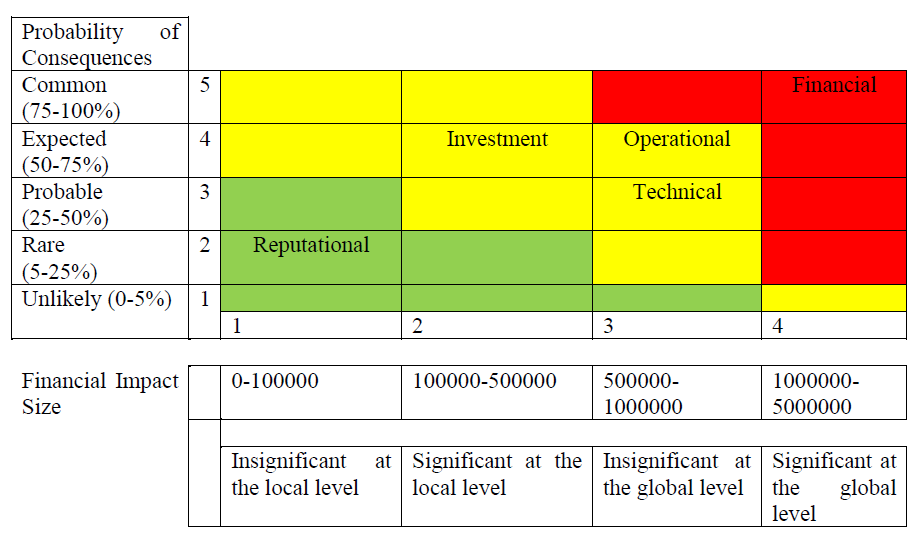
Рис. 2. Карта рисков АО «Белгородский молочный комбинат»
Fig 2. Risk Map of Belgorod Dairy Plant JSC
Conclusion
The conducted assessment of economic risks at an industrial enterprise allowed us to establish the dependence of particular business processes on the aggregate resources of the enterprise. Based on the identified dependence, models of key business processes have been constructed, allowing us to assess their degree of sustainability. Risk and risk type identification at Belgorod Dairy Plant JSC has been carried out for the most risk-vulnerable business processes. Such risks include financial, operational, investment, reputational, and technical risks. Furthermore, the article has developed a risk map for assessing the likelihood of a risk event and evaluating the magnitude of the financial consequences, as well as the significance of each risk type. This map of correlated risks will enable the company’s management to effectively organize risk management at the industrial enterprise.















Reference lists
1. Arkadyeva, O.G., Berezina, N.V. (2019) “Analysis of Methodological Approaches and Principles of Risk Assessment Based on the Formation of Integral Risk Index Ratings”, Issues of Risk Analysis, 16(6), 78-89. (In Russ.) https://doi.org/10.32686/1812-5220-2019-16-6-78-89
2. Vasiltsov, V.S. (2024) “Risk management of business processes of industrial enterprises: analytical and applied aspects”, Scientific journal of NRU ITMO, Series "Economics and Environmental Management", 1, 51-59.
3. Gadzhikurbanov, D.M., Glukhova, D.M. (2013) “Qualimetric approach to a comprehensive assessment of industrial enterprise risks”, Bulletin of Izhevsk State Technical University, 3, 60–64.
4. Generalova, A.V., Morozova, T.F., Kruglik, A.A. (2013), “Integral risk assessment of an industrial enterprise”, Design and Technology, 36(78), 95–102.
5. Nefedyev, D.S. (2014) “Conceptual aspects of the theory of industrial enterprise risk management”, π-Economy, 4 (199), URL: https://cyberleninka.ru/article/n/kontseptualnye-aspekty-teorii-upravleniya-riskami-promyshlennogo-predpriyatiya
6. Panyagina, A.E. (2014) “Review of modern methods of quantitative risk assessment”, Economy and management of innovative technologies, 3, 42-42.
7. Prokhorova, I.S., Gureev, P.M. (2023) “Digital maturity of business: technological gap and limitations of digital transformation’, Bulletin of the University, 4, 49-56. https://doi.org/10.26425/1816-4277-2023-4-49-56
8. Rezvyakova, I.V., Lilenko, A.T. (2021) “Features of the implementation of a business process management system at an enterprise”, Bulletin of Chelyabinsk State University, 3 (449), 224-232. DOI 10.47475/1994-2796-2021-10326.
9. Sushilova, I.A. (2017) “Various approaches to defining the concept of "business process"”, Theory and practice of modern science, 6 (24), 804-806.
10. Sharokhina, S.V., Shevchenko, T.A., Erofeev, A.L. (2023) “Definition of the essence and classification of economic risks at the micro level”, Fundamental research, 5, 66-70. DOI 10.17513/fr.43461.
11. Shevtsov, K.A., Makovetskaya-Abramova, O.V., Luneva, S.K. (2023) “Risk management of an investment and construction project based on the method of expert assessments and an integrated approach”, Bulletin of the Sholem Aleichem Primorsky State University, 2 (51), 87-97.
12. Yalunina, E.N., Matveeva, A.I. (2024) “Improving business processes at an enterprise based on risk assessment”, Bulletin of the Altai Academy of Economics and Law, 8, 504-509.
13. Yarmametov, A.E. (2022) “Economic risks of the enterprise: factors influencing their level and forms of neutralization of economic risks”, Naukosphere, 12-1, 481-485.
14. Kiseleva, I.A. et al. (2023) “Methods of risk assessment and decision-making in investment projects amid economic instability”, Journal of Management & Technology, 23 (1), P. 57-68.
15. Wang X., Gu Y., Ahmad M., Xue C. (2022) “Impact of digital capability on manufacturing company performance”, Sustainability, 10(14), 6214. https://doi.org/10.3390/su14106214